Used violins: player fit, setup and a playable outfit
Quick answer
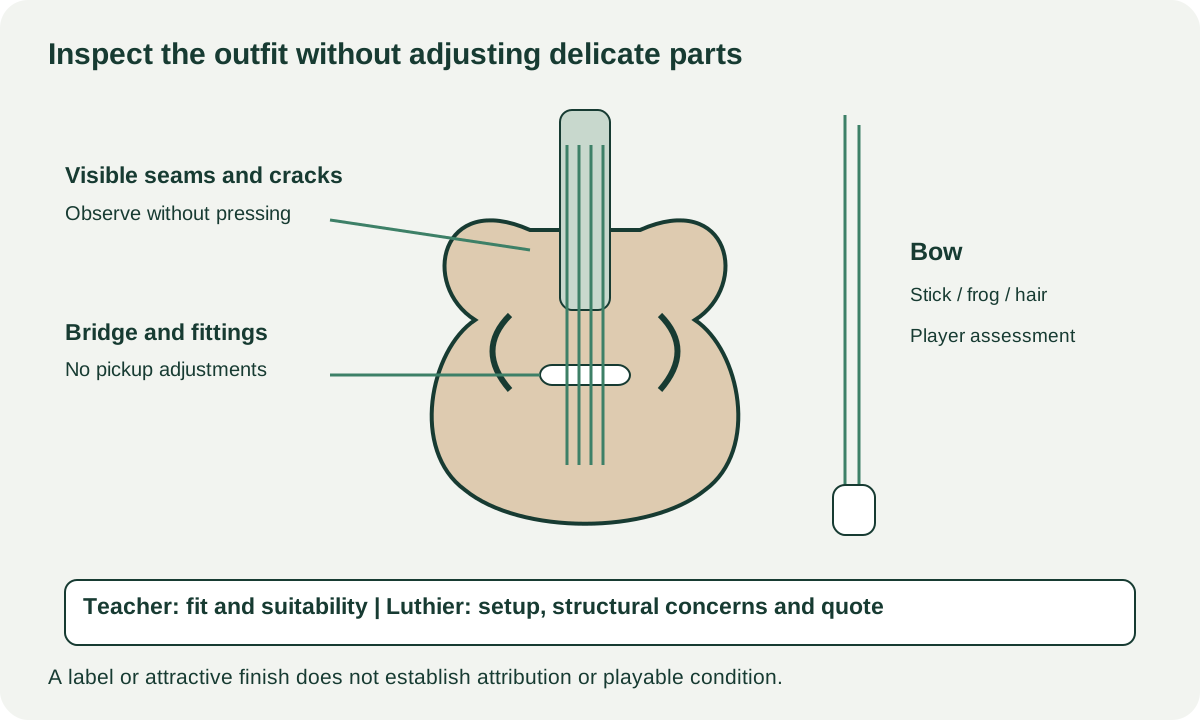
Confirm the player’s size and needs with a teacher, then assess the actual violin, bow and case as a complete outfit. Inspect visible seams, cracks and fittings without adjusting them, and have an experienced player demonstrate ordinary response. A label or attractive varnish does not establish maker, value or playability. Obtain a luthier’s findings and quote for any setup or structural concern.
Let the player and teacher define the instrument
Start with the intended player, their current stage and the teacher’s requirements. A fractional-size instrument is not simply a cheaper full-size violin, and a growing child should not be fitted by a seller’s age chart alone. Arrange a teacher or experienced player’s help with fit before choosing the listing.
Separate the instrument’s role from its collecting appeal. A student needs an outfit that can be held, tuned and played comfortably. A collector may also care about attribution, originality and provenance. An internal paper label, handwritten date or family story is not an independent appraisal of the maker or value. If a price depends on that attribution, use a qualified specialist and documentary evidence.
Ask for photographs of the front, back, sides, scroll, bridge area, bow and case. Request the actual size, known repairs, last setup work and what is included. A violin-only offer needs a bow, suitable case and appropriate accessories before it becomes a usable first lesson.
Inspect with the instrument supported
Let the seller or experienced player handle it safely. In ordinary light, look for open seams, visible cracks, unusual distortion, loose fittings and obvious impact marks. Do not press the top, flex a crack or tighten every screw to see what moves. A finish mark and an open structural crack require different judgments that a casual buyer may not be able to make.
Look at the bridge position and condition without moving it. Check that the fingerboard and tailpiece appear secure, the chinrest is not visibly damaging the body and the pegs can be assessed by someone familiar with tuning. Do not remove strings or attempt a bridge correction as part of a sale inspection.
Yamaha’s violin maintenance guidance identifies soundpost work as a professional task. Its stringed-instrument care guidance explains why the bridge, strings and internal support deserve careful handling. The buying implication is to refer displaced or questionable fittings to a luthier, not use a quick DIY adjustment to make the sale proceed.
 Enlarge diagram
Include the bow and case in the examination
Ask the experienced player to inspect the bow stick, frog, screw action and hair condition using normal handling. A bow that cannot tension and release appropriately, has a visible crack or is badly distorted needs specialist assessment. Do not overtighten it or bend it by hand to prove strength.
A case should hold the instrument securely with its intended supports and working latches or zip. Check for persistent damp odour and damaged interior fittings. A decorative old case may be part of a collectible package but not suitable protection for a student carrying the violin to lessons.
List the bow, case, shoulder rest where needed, strings and any other required items separately. Fit matters: an included rest or bow that does not suit the player should not receive full useful value simply because it adds to the item count.
Hear the violin in an ordinary playing demonstration
An experienced player can tune appropriately and play across the strings, using ordinary notes and positions relevant to the student’s needs. Listen for persistent rattles, notes that do not respond normally and tuning difficulties, while recognising that technique, strings, bow and room all contribute.
The buyer should also try holding and playing it if able. A confident seller can make an awkward instrument sound better than a beginner will find it. Conversely, a beginner struggling to produce a clean tone does not diagnose a defective violin. The teacher’s role is to distinguish suitability and technique from a concern that needs a luthier.
Record what was demonstrated and what remains uncertain. A short playing session cannot establish hidden repairs, exact maker attribution or future stability. For a costly instrument, a specialist examination and suitable trial terms can be more valuable than an extended seller performance.
| Observation | Professional question | Buying decision |
|---|---|---|
| Visible seam opening or crack | What repair is needed and does it affect use or value? | Obtain a luthier quote before treating it as playable |
| Tuning or response concern | Strings, setup, fittings or another cause? | Do not guess the smallest fix |
| Bow does not behave normally | Rehair, adjustment, damage or replacement? | Price the assessed bow outcome separately |
| Player cannot comfortably use the size | What size/setup does the teacher recommend? | Change candidate rather than negotiate fit away |
| Valuable-maker claim | What evidence supports attribution and originality? | Independent specialist assessment |
Compare ready-to-play outfits
A hypothetical violin costs $180, with an assessed $130 setup, $70 suitable bow and $50 protective case: $430 before collection. A $390 outfit that the teacher finds suitable and a luthier finds serviceable may be the stronger first-instrument purchase. These are illustrative numbers, not instrument appraisals or service prices.
Only count a repair as known after the relevant person has examined it and quoted the work. Do not put a small generic “setup fee” against an unexplained structural issue. Compare the complete outfit with a shop’s actual rental, trial or serviced-used terms when those are available to you.
Buy when player fit, observed response and assessed condition meet the intended use. Negotiate known consumable or accessory gaps using real quotes. Pause for structural uncertainty or valuable provenance claims that have not been independently assessed. Keep the instrument supported and protected during collection, and follow the teacher’s or luthier’s advice for its first setup.