Collect a Marketplace purchase for someone else
Quick answer
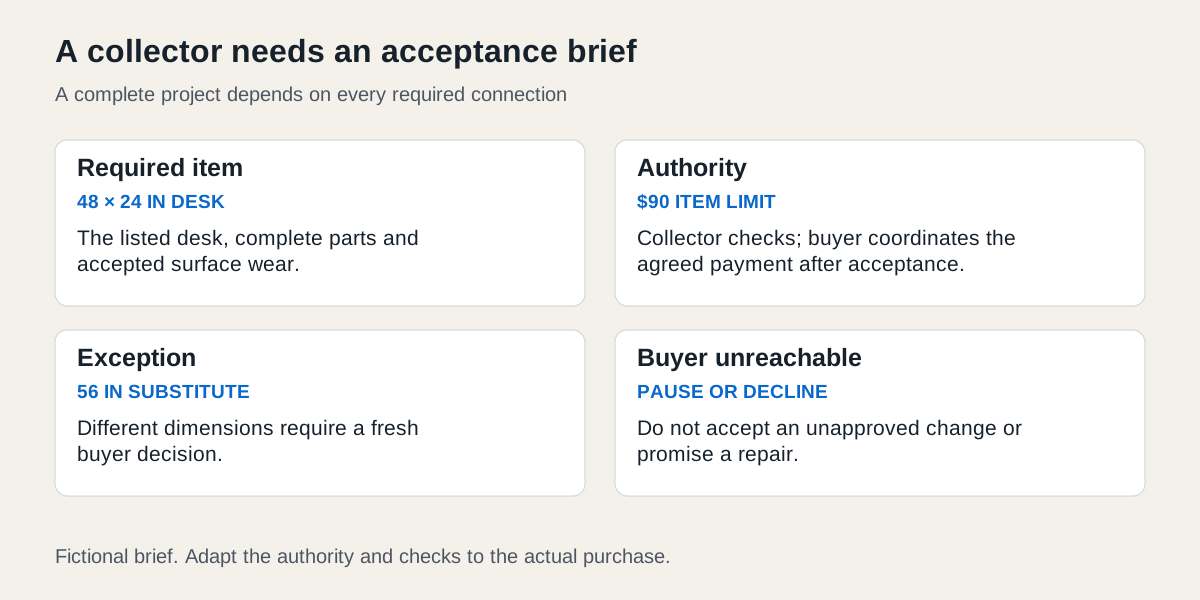
Agree the exact item, acceptable condition, authorised checks, spending limit and payment roles before collection. If an unapproved substitution or fault appears and the buyer is unavailable, postpone or decline.
 Enlarge diagram
Decide who can accept the item
When you collect for someone else, distinguish the buyer who sets the requirements, the collector who examines the item and the person who pays. One person can perform several roles, but the seller and collector should understand the arrangement before travelling.
A collector needs a usable acceptance brief, not “get it if it looks fine.” Ask the buyer which requirements are essential, which wear is acceptable, what checks are authorised and when to stop. An informal note helps coordination; it is not a legal guarantee or a replacement for the transaction’s actual terms.
A filled collector brief
This fictional buyer wants a basic desk. The amounts and measurements are example requirements, not recommendations for every room.
| Field | Agreed instruction |
|---|---|
| Item | The desk shown in the seller’s current listing; no substitute |
| Size | 48 inches wide × 24 inches deep; height 29–30 inches; verify actual measurements |
| Included pieces | Complete legs, top and required fixings; no unresolved assembly parts |
| Acceptable condition | Minor surface scratches shown in advance; stable in ordinary use |
| Pass reasons | Water-swollen panels, cracked joints, missing fixings, persistent wobble or dimensions outside the brief |
| Price authority | Up to $90 for the desk; separate agreed $25 collection budget |
| Authorised checks | Compare the listing, measure accessible dimensions and inspect ordinary visible condition with permission |
| Payment | Buyer pays through the previously agreed method only after the collector confirms acceptance |
| Exceptions | Call the buyer once; if unavailable, postpone or decline rather than accept a change |
The collector receives the listing, agreed brief and necessary contact arrangement. They do not need the buyer’s bank password, account login or unrelated personal details. Tell the seller that another person is collecting and how the final acceptance and payment will be coordinated.
What happens at collection?
The collector first confirms that the actual item is the one agreed. They complete the authorised checks, compare observed condition with the brief and send a concise result: “Dimensions match. All required parts present. The disclosed scratches are visible; no additional issue found in the agreed checks.” That is an observation record, not a professional inspection certificate.
If the buyer’s payment must be confirmed before loading, allow for that step in the agreed schedule. The seller should verify payment in their own appropriate account or payment service; a forwarded image is not a substitute for the actual confirmation. Do not improvise a new payment method or recipient because someone is in a hurry.
The FTC’s marketplace guidance recommends understanding the seller, description and transaction terms. Delegating collection does not create platform protection or a return right that the transaction otherwise lacks.
The substitution branch
At the meeting, the seller offers a similar 56-inch desk because the listed one was sold. The collector photographs or notes the new dimensions with permission and contacts the buyer. There is no answer. The brief does not authorise a larger desk, so the collector declines or leaves the alternative pending. The seller’s claim that it is “worth more” does not resolve the buyer’s space requirement.
A fault follows the same logic. If the desk wobbles beyond the accepted condition, the collector cannot decide that a $10 discount compensates for it unless the brief gives that authority. Do not make a repair promise on the buyer’s behalf.
If the buyer can be reached, describe the discrepancy accurately and obtain an explicit revised decision. Confirm any new price and included pieces with the seller before payment. If the collector lacks the skill or equipment to verify the revised requirement, postpone instead of treating a telephone approval as evidence that the item works.
Finish with a clean handover
Give the buyer the item, relevant photographs, included parts and purchase/payment record. Record any limitation in the checks so the buyer knows what remains to be done. Use the purchase-record guide for the useful details.
For a device, include the official ownership-release checks in the brief before the trip. For a purchase shared by several owners, use the roommate guide to settle their requirements first. A delegated collection works best when the collector can confidently say both yes and no within the buyer’s actual instructions.