Arrange seller delivery for a Marketplace purchase
Quick answer
Agree the item, complete delivery price, destination scope and who carries it before sharing the necessary address. Confirm how you can inspect it, when payment is due and what happens if the item differs or access fails. Seller delivery is a transport arrangement; it does not itself add purchase protection.
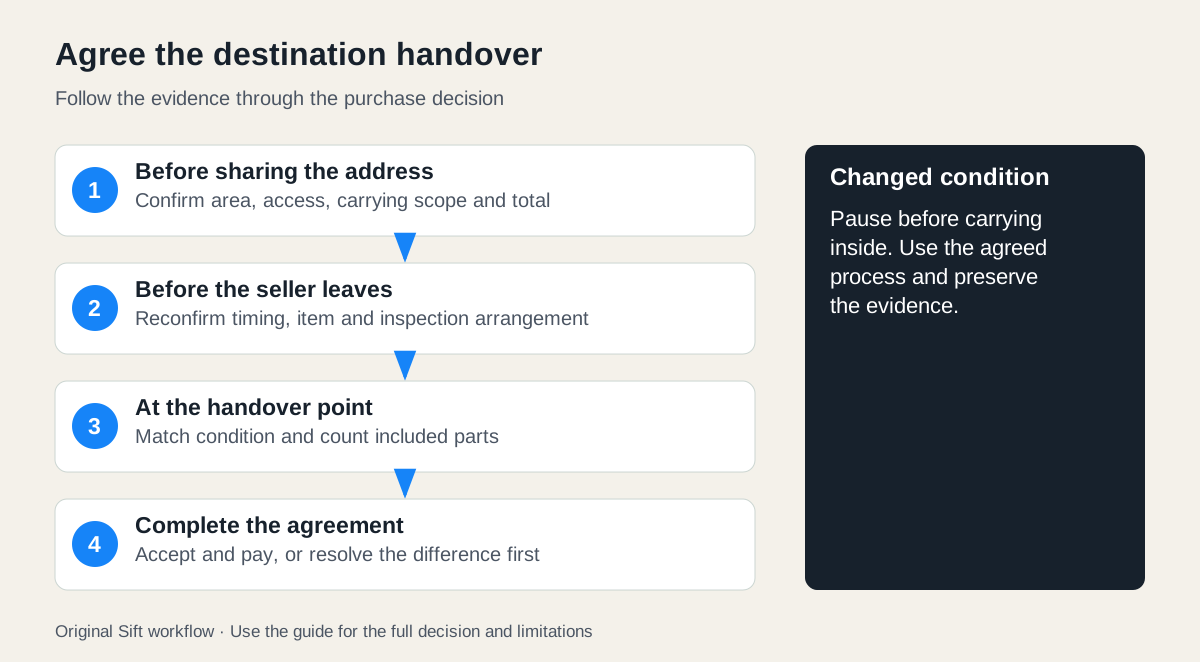 Enlarge diagram
Define where delivery ends
“Can deliver” is incomplete until both people understand the handover point. Kerbside, building entrance, inside the lobby and placed in a room are different services. Ask whether the seller brings a helper, whether you must supply carrying help and whether disassembly or reassembly is included.
This page handles delivery by the seller. If you are still choosing between seller delivery, a collection provider, a rented vehicle or a helper, use the no-car furniture guide. Once seller delivery is chosen, agree the destination handover in detail.
Do not assume delivery makes an item inspected, reserved or protected. The FTC advises checking the seller’s written terms and the actual marketplace protections. A private arrangement needs its own clear facts.
A complete desk-delivery agreement
This is a fictional example. A desk costs $90 and the seller offers $25 delivery to the building entrance. The buyer has an appropriate helper for the remaining carrying, after confirming access and the largest desk section. The seller is not agreeing to carry it upstairs.
| Point | Agreed detail in this example |
|---|---|
| Item | Exact desk shown; dimensions and included legs/hardware confirmed |
| Total | $115: desk 90, delivery 25 |
| Window | Saturday 2–3 p.m.; seller messages when leaving |
| Destination | Building entrance at agreed legal loading point |
| Carrying | Seller unloads to agreed point; buyer and helper handle onward move |
| Inspection | Buyer compares condition, identity and hardware at entrance before acceptance |
| Payment | Agreed method and timing; example uses payment after agreed inspection |
| Difference on arrival | Pause handover and discuss before carrying inside |
| Failed access | Responsibilities and any retained delivery fee expressly agreed beforehand |
Payment after inspection is the agreement in this example, not a universal right or something every seller accepts. If a seller requires prepayment, evaluate the payment method, seller evidence and applicable protection before deciding. Do not assume you can change the sequence at the door.
Share access information in stages
Early in the enquiry, a general area and access description are usually enough for a quote. When the arrangement is confirmed, provide the address and details needed for that delivery. Avoid sharing household routines, when nobody is home or unrelated information about other residents.
Tell the seller about stairs, parking restrictions, loading bookings, narrow entrances and any building rules relevant to their agreed role. If delivery ends outside, clarify where the inspection can occur without obstructing others or exposing the item to unsuitable conditions.
A useful confirmation message is:
Confirming Saturday 2–3 p.m.: $90 desk plus $25 delivery to the building entrance. You will unload there; I will have a helper for the onward move. We will check the desk and listed hardware at the entrance before the agreed payment. Please message before leaving so I can confirm the loading point is available.
Add the actual changed-condition and failed-access agreement rather than assuming the message covers it.
Keep acceptance separate from carrying
At arrival, compare the item with the saved description and photographs before it disappears into the apartment. Check included parts and any visible condition difference. A quick doorway review is not a substitute for the product-specific inspection that should have been arranged; some items cannot be meaningfully tested at an entrance.
If a necessary function cannot be checked there, decide beforehand whether another inspection location or written term is needed. Do not improvise unsafe electrical tests in a lobby or accept an appliance on the assumption that delivery staff can install it.
Use the purchase-record guide to retain the agreed condition, delivery fee and actual handover outcome. Keep the record factual and proportionate.
What if the desk arrives different?
In the fictional case, a leg has fresh damage that was not visible in the saved listing. The buyer stops before carrying it upstairs, photographs the affected area with permission and explains the difference. They do not repair it or negotiate while the seller assumes acceptance is complete.
The parties may agree no purchase, a suitable remedy or a revised price if the item remains safe and useful. Whether the delivery fee is retained depends on their actual agreement and applicable rights; this guide cannot assign it automatically. A discount should not convert an unresolved structural problem into an acceptable desk.
If the item has already been paid for or the seller disputes the difference, preserve the record and use used item not as described. Delivery costs and the item-price dispute may need separate treatment.
What if the access fails?
Suppose the buyer’s lift booking is cancelled before dispatch. They notify the seller immediately and discuss rescheduling under the agreed terms. If the seller has already travelled, any agreed charge still needs to be considered. Do not pressure them to provide unagreed stair carrying to rescue the plan.
If a measured desk cannot pass a turn, stop the move. The furniture fit checker can organise simple dimensions but does not prove a complex carrying route. Resolve uncertain turns with the appropriate delivery professional before committing.
A successful seller delivery ends with the correct item at the agreed handover point, the promised parts accounted for and payment completed under understood terms. The buyer’s next job is safe setup, covered by the first-day guide.