A used item is not as described: organise the evidence and next step
Quick answer
Stop unsafe use, preserve the listing and arrival evidence, and write down the exact difference between what was promised and received. Ask the seller for a specific remedy. If unresolved, check the applicable marketplace, payment and local consumer processes promptly; eligibility and deadlines depend on the transaction.
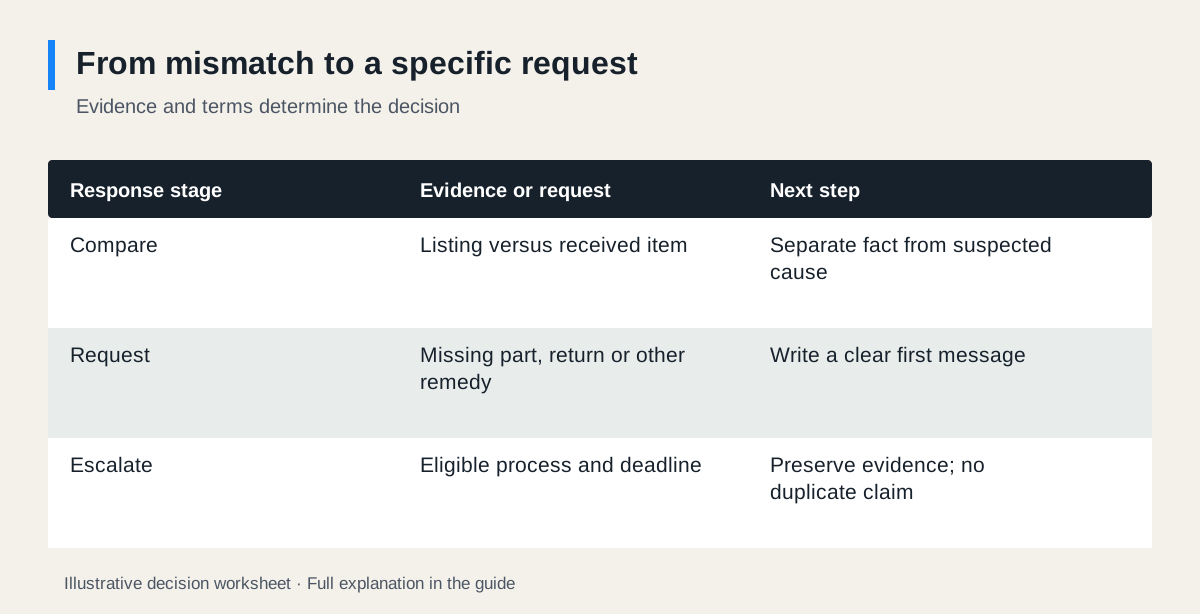 Enlarge diagram
Separate the mismatch from the conclusion
Start with observable facts. “The listing included two shelves; only one arrived” is clearer than “the seller scammed me.” “The monitor displays a vertical line on the agreed input” is different from a diagnosis of which internal component failed.
Keep three categories separate: a difference from the description, damage that may have occurred in transport, and a fault whose history is unknown. They may overlap, but they require different evidence. You do not need to solve the cause before recording what you received.
If the item appears unsafe, do not use it to produce a more dramatic demonstration. For arrival photographs, packaging retention and safe stop-use decisions, start with inspect delivered used items. This guide takes over once that record exists.
Example one: the cabinet has one shelf, not two
In this fictional example, a cabinet listing says “two adjustable shelves included.” The saved photographs show both. The delivered cabinet contains one shelf and its supports. The buyer records the interior and included parts before moving or assembling anything further.
| Point | Advertised or agreed | Received or observed | What it establishes |
|---|---|---|---|
| Cabinet identity | Model and photograph saved | Label and appearance match | The item appears to be the agreed cabinet |
| Shelves | Two included | One counted | A specific missing component |
| Exterior | Mark disclosed on left side | Same mark observed | Known wear, separate from the missing shelf |
| Delivery | Entrance handover | Completed | Does not resolve completeness |
The buyer asks whether the second shelf was left behind and requests it with its supports. That is a narrower and more useful first request than demanding compensation for every disappointment. If the shelf is unavailable, a suitable alternative could be an agreed partial refund based on a confirmed compatible replacement, or a return under an applicable agreement or process. The buyer should not order a replacement on the assumption the seller will reimburse it.
A first message might read:
The cabinet delivered today matches the listing, but it arrived with one shelf. The description and saved photo show two. I have attached a photo of the contents. Could you check whether the second shelf and supports were left behind and confirm how they can be supplied? Please reply by Thursday so we can resolve the next step.
The requested response date is a practical request, not a new legal deadline or a substitute for a platform claim deadline.
Example two: a function fails after collection
A buyer purchases a used monitor after seeing its HDMI input work. At home, the DisplayPort connection they intended to use fails. The listing said “both inputs working,” but the buyer had not demonstrated the second input at collection.
The first task is to record the observed behaviour with the agreed configuration and ordinary troubleshooting permitted by the manual. A different cable or computer can help distinguish compatibility from a monitor fault if that check is safe and available. Do not open the monitor or alter firmware simply to strengthen a dispute.
The buyer should say what they observed and what the listing promised, while being honest that the cause is not established. If the seller disclosed the input as untested, that changes the comparison. If the buyer chose an incompatible connection, that is a different problem from misdescription. The model identification guide can help confirm which feature the exact variant supports.
Build a small, useful evidence pack
Keep the original listing or saved copy, relevant messages, item identifiers, payment record, receipt, dated photographs and a short timeline. Preserve originals and send copies where appropriate. Do not include unrelated conversations, private files from the item or other people’s personal information.
Your timeline might be five lines: agreement, payment, handover, first observation and first contact. Record any response accurately, including an offered remedy. A long accusation can obscure the useful facts; a concise comparison is easier for the seller or a case reviewer to assess.
Avoid repairing, disposing of, returning or continuing to use the disputed item before checking the process. Sometimes a return needs authorisation, a particular address, tracking or retained packaging. Sometimes a hazard means it should not be shipped normally. Follow the relevant instructions rather than improvising.
Choose the route that applies
| Transaction fact | Check next | Do not assume |
|---|---|---|
| Business seller | Written terms and local consumer authority | A “final sale” label settles every right |
| Eligible marketplace checkout | Order-specific protection and deadline | Every item found on the platform qualifies |
| Card or payment service | Provider’s dispute procedure and evidence requirements | Every transfer has purchase protection |
| Private local payment | Seller agreement and applicable local advice | The platform can reverse the payment |
| Apparent transport damage | Sender and carrier’s claim instructions | Recipient and sender have identical claim rights |
The FTC’s resolution guidance recommends a clear account of the issue and desired resolution when dealing with a business. Its marketplace guidance also directs buyers to check the protections and problem routes for the actual purchase. These are US sources; they do not create a universal remedy for private transactions elsewhere.
Check deadlines promptly, even while discussing a solution with the seller. Do not let a voluntary conversation silently run past an applicable claim window. Keep accounts of the facts consistent across processes, disclose refunds already received and do not seek duplicate recovery.
Decide what resolution would actually work
For the cabinet, the correct shelf may solve the problem at less effort than a return. For an essential monitor, an uncertain repair timetable may not meet the buyer’s work deadline. State the outcome you need and what you can reasonably accept without claiming that your preferred outcome is automatically owed.
If the seller proposes a refund after collection, confirm the amount, item/accessory handover, transport responsibility and payment sequence in writing. Do not send money to “release” a refund or follow an unexpected payment link. Verify any platform or provider process through its own official app or website.
If the issue remains unresolved, use the appropriate consumer assistance or legal route for the amount, jurisdiction and seller type. A report may help an authority or platform address conduct without recovering your money. Keep that distinction clear when deciding how much further time to spend.